




Custom Foam Background DIY Guide
This care sheet is downloadable for easy printing!  Click to download.


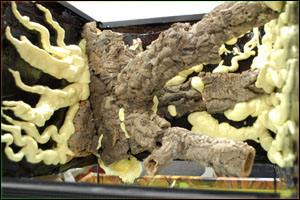
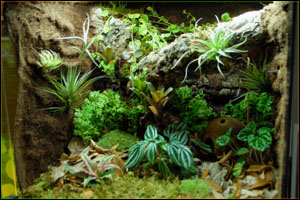
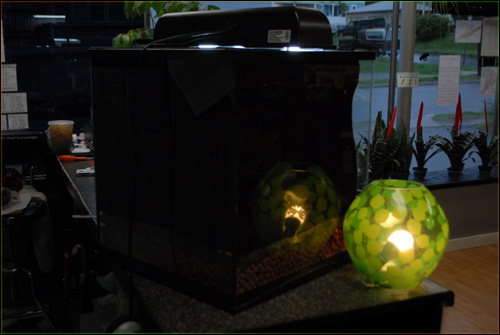
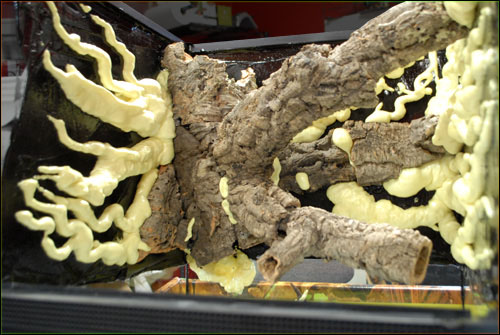
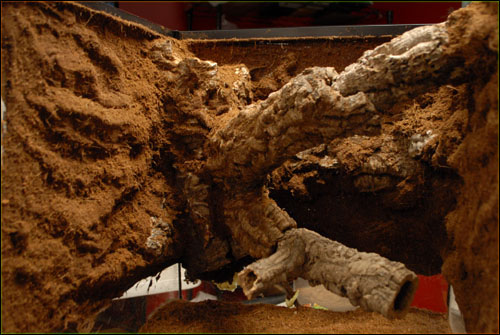
Before                                                                   During                                                                   After

This article will explain the process we use when building a custom polyurethane & silicone based vivarium background.  We've found this to be the best looking and longest lasting custom background for the money.  This is the most common method we use when we build custom cages for our customers, and we've heard nothing but complements as to the look & longevity of this style.  The way we build these backgrounds isn't the least expensive or quickest way, but the finished product is worth the time & expense in our opinion.  These backgrounds are best suited for small/medium temperate or tropical species, and they hold up perfectly in highly humid conditions. 

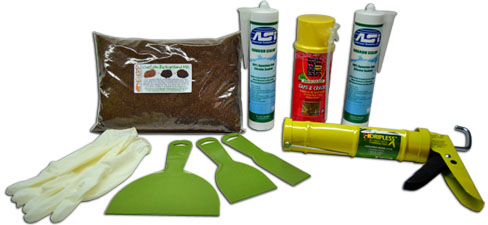
What you'll need:
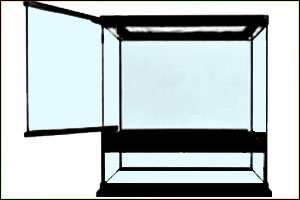
Terrarium / Aquarium
Spackle Putty Knife
100% Silicone - Black
100% Silicone - Brown
Latex/Nitrile Gloves (highly recommended)
Great Stuff Polyurethane Foam
Dry Coir (medium & fine preferred)
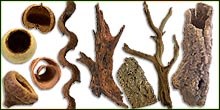
Cork, mopani, driftwood, or whatever other decor item you'd like blended into a background
Razor blades


Step 1 - Silicone
Many DIY guides skip this super important step to save time & money.  This step ensures a tight, even looking seal against the glass terrarium you are using, and in our opinion shouldn't be skipped.  Otherwise the ugly foam is visible from the outsides of the cage, and foam can be easily pulled away from glass.  Put on some latex gloves and simply add a thin layer of black 100% pure silicone along whatever section of the background you'll be building the background on.  Spread it thinly and evenly across the entire area you plan on adding a background to.  A spackle putty knife is a huge help here.  In our example, the background extends from the back to both sides.  Ideally GE1 or All Glass aquarium silicone should be used, but if those aren't available try and find one without a bunch of potentially harmful chemical additives. 
The silicone should appear smooth and uniform on the outside of the terrarium.  When it's done it should look like this from the outside:


Obviously yours won't have hydroton yet! :)

The initial silicone layer does NOT need to be pretty as far as edges go.  It can be blobby and uneven, since it's all getting trimmed back later anyways.  Your goal should be to keep the silicone looking bubble free from the outside in.  We usually leave about 3-4" from the bottom clear, since that's where the hydroton & substrate will go...  In the later steps coconut fiber can stick to silicone down into the hydroton & wick it up into the substrate, which is bad!

* Allow 24-48 hours to cure before proceeding *


Step 2 - Foam & Decor
The next step is where it gets good.  You can now place any pieces of cork, mopani, driftwood, rocks, or vines onto your background.  We use a bit more silicone to adhere the new decor to the already cured initial silicone layer so it's extra secure.  After that, you can begin foaming!  We suggest Great Stuff Window & Door foam.  Not the red can stuff which has proven to be much harder to work with, and it expands (and later shrinks) far too much for this application. 


The foam should contour the background, add ledges, and do whatever else you'd like it to do!  If you can't quite get it right on the first application, you can cut & carve it to make it look exactly as you'd like it to.  Silicone (the next step) sticks better to smooth, uncut foam so try and keep cutting to a minimum.  When using window & door foam, let it cure after foaming for about 15 minutes and it should actually be pliable enough for you to push, pull, and form it using your hands.  We really suggest using latex gloves for this step.

* Allow 24-48 hours to cure before proceeding *


Step 3 - Silicone & Texturing
This next part requires good timing and it can easily go bad if you aren't prepared.  Take your time and make sure you have everything ready before you apply silicone.  First we suggest mixing up some fine & medium grade coir (coconut fiber).  Mixing the two isn't 100% necessary (most people use straight fine "eco earth"), but it adds a bit more dimension to the background and we've had good luck with it.  Some people mix in turface, orchid bark, sphagnum moss, and other dry media to enhance texture, but in this example we used fine & medium grade coir.  (We like this mixture best)


Once your mix is prepared apply a layer of brown or almond 100% silicone over all of the exposed black silicone and polyurethane foam.  Be sure to completely cover the foam and if you have to, add a little extra onto the edges touching your decor add-ins to be sure they look appropriately blended in.  (It can be trimmed later if you use too much.)  The silicone should completely cover all of the great stuff and black silicone, but not be thicker than 1/8".  Silicone applied in an area thicker than 1/8" will take a very long time to cure.

You've only got about 7 minutes before the silicone begins to get tacky, so silicone carefully!  It's a pain to have to go back and correct errors, and difficult to make corrections look perfect.  This is the most important step.

After all the brown silicone is applied and you've triple checked to make sure you don't have any missing spots, dump a bunch (much more than you'll use) of the coconut fiber mix onto the silicone and gently, evenly press it into the wet silicone. Be sure to remember where all the small details and crevices are!

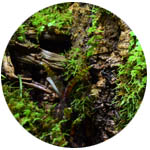
Allow your terrarium to sit background side face up with the coconut fiber pile still on top of the drying silicone for at least an hour. If you've applied silicone & coconut fiber to the sides & background simultaneously, don't try and remove the remaining pile(s). Let it all sit for at least a few hours, so the silicone can hold on to as much of the coconut fiber as it can. After that, face it up and start to shake (or blow) off the coconut fiber. It should look something like this:


* Allow 24-48 hours to cure before proceeding *


Step 4 - Trim Work
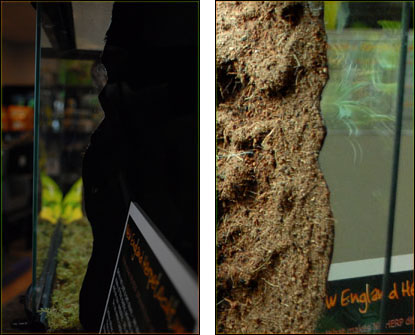
The difficult task is behind you!  By now you should have what looks like the beginnings of a nice custom background.  Now all that's left to do is trim all of the edges of the silicone to wherever you'd like them to be using a razor blade.  Be careful not to hit any noticeably thicker silicone or foam. You'll be trimming the outsides of the background (shown below) and also anything overlapping the (in our case) cork feature on the inside of the vivarium that you'd like removed.
When you are done trimming the edges it should look something like this:


* Allow 48-72 hours to cure before proceeding *


Step 5 - Plant It & Enjoy!
If you need some guidance on the next step, check out our Vivarium Construction 101 guide here.
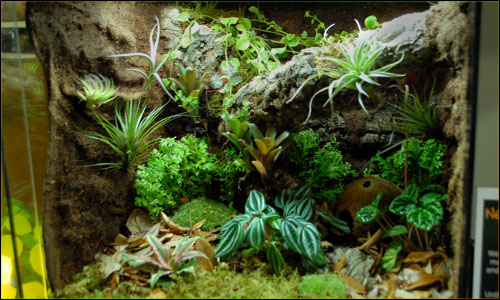
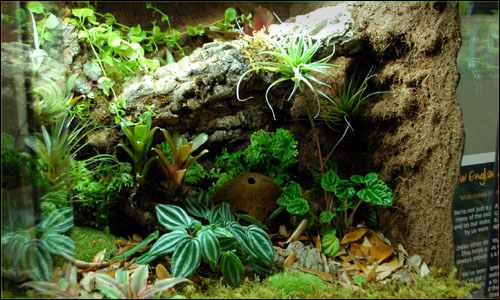
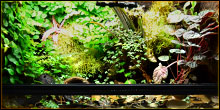
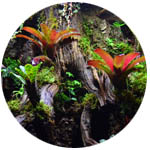
Once it's all said and done, the background should look something like this:


Tips & Tricks
• If this is your first attempt at a custom background don't use an expensive terrarium!  Start small so you have less to lose if things go south.

• Don't be surprised about cost.  On an 18" cube like the vivarium above, the base cost to build a background like that for yourself is around $85 or more in supplies alone.  The cost of silicone & foam adds up quickly.

• Get a friend!  Having a second set of hands on step 3 goes a long way - especially on larger terrariums.

• On larger terrariums, do step 3 in stages.  Half one day, half the next works much better than scrambling like crazy to get it all done before the silicone gets tacky.

• Test silicone before you use it.  Occasionally a bad tube of silicone (stuff that never cures) is reported on online forums.  It seems overkill, but imagine getting everything done to find out your cage is unusable!

• Never plant a cage if you can still smell a strong silicone smell.

• Hitting a background with fans (at every step) can knock down curing times & make things go by much faster.

• If you are building a custom background for a larger species like gargoyle geckos, consider using a slightly more textured surface type.  Mix in a bit of fine orchid bark, calcinated clay, or turface to make it a bit more rugged.


Special thanks to our awesome customer John M. who owns the above vivarium. 
It was extremely nice of him to allow us to post pictures of it online. ☺
For those who are wondering, it was built for a trio of D. Leucomelas poison dart frogs.


Hopefully this article answered most of your questions on the basics of how to build a custom poly foam background.
As always if you have any questions at all, we're happy to help!  Email us at meikmail@gmail.com


Back to Care & Media

To The Supply Menu
To The Main Store Menu


Fauna Top Sites