Vivarium Showcase:
"The NEHERP Recycling Bin Vivarium"
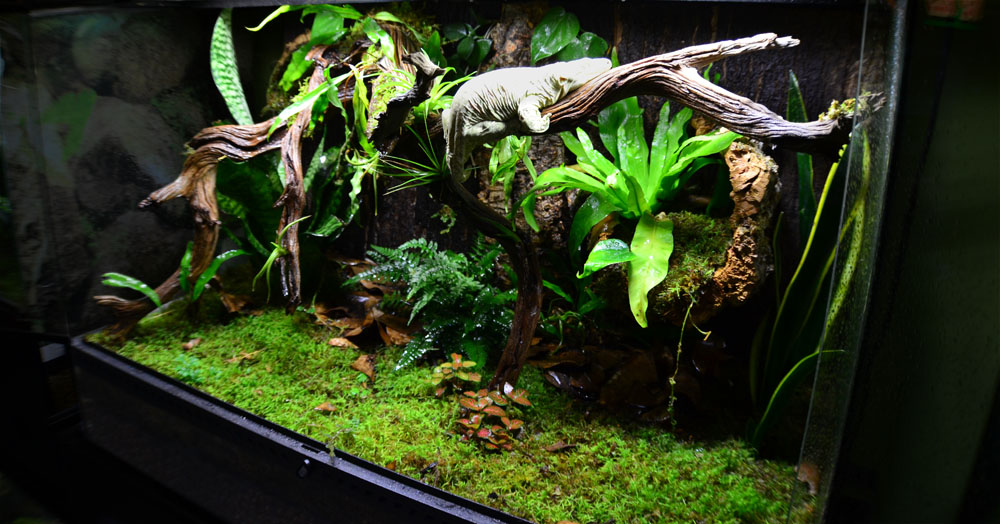
We decided to showcase this particular vivarium since it's a great example of repurposing, reusing, and repairing things which may have otherwise been thrown away. While it may not be the most beautiful vivarium ever, we think it's pretty cool with all things considered. Of course not everyone will have a vivarium store's worth of damaged gear to pick through to build a vivarium like this, but maybe one or two of the things in this example might help save a few bucks on a future build! While this vivarium is the definition of a budget build, it was actually built to house a not-so budget friendly Rhacodactylus leachianus Gecko. (Common name: The New Caledonian Giant Gecko) One of the cooler features of this enclosure is the background, so we'll start there...

The Custom Background
How we built this enclosure's custom background
☆ The below info follows the basics outlined in our Gecko-Safe Custom Background DIY Article ☆
Because the inhabitant is so large & would quickly damage a traditional polyurethane foam background, we opted to build a heavy duty style vivarium background instead.
Using Two Cork Tiles:
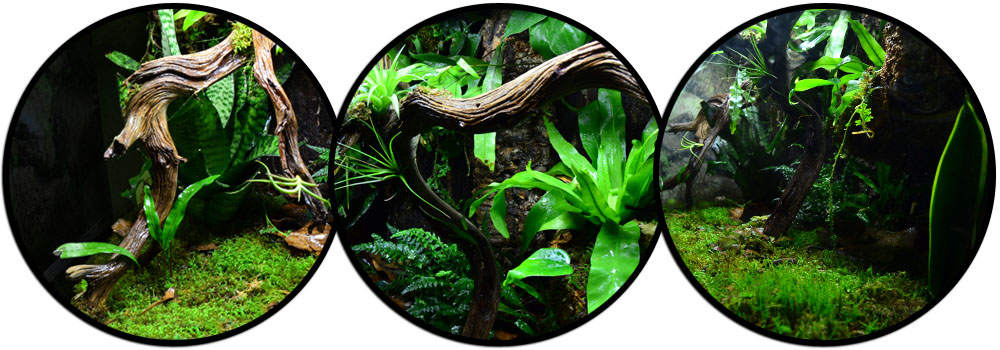
These types of custom backgrounds are essentially heavily customized Zoo Med Cork Tiles, with multiple 3D accents added to the otherwise flat cork surface. Since this enclosure is larger than the largest Cork Tile made, we ended up using two cork tiles, with single cork flat cut to bridge the 1/2in gap between them. (Seen in the center of the photo) The Cork Tiles and center Cork Flat were adhered to the enclosure using ASI Aquarium Silicone. With the flat installed, the two tiles appear more like a single piece, and the gap between them doesn't distract from the overall aesthetic.
The Ghostwood:
The most prevalent feature of the vivarium is the massive piece of Ghostwood mounted to the left Cork Tile, which took a fair amount of effort to accomplish safely. Since it's so heavy, there would be a much greater chance of the wood eventually falling off the background compared to a more typical Cork style background, unless preventative steps are taken. In this case, we actually used three disguised mount points to ensure it stays put permanently. The first mount point is through the cork tile background, where we pre-drilled pilot holes, and used three stainless steel screws to support the wood. As usual, silicone was added between the Ghostwood & cork tile to encourage the strongest bond possible, and all excess silicone was disguised by Custom Background Texture Mix. The second mount point is between the bottom-left portion of the wood and the plastic frame of the Exo Terra enclosure, where we added a 1/4in dab of silicone to adhere the two. Since the wood travels below substrate level in that area, the mount point is completely hidden! The final mount point was a tiny dab of silicone between the far right side of the Ghostwood & right glass panel. The amount of silicone used was absolutely tiny, and this spot carries very little (if any) weight. Instead of it carrying a load, it helps prevent the Ghostwood from twisting in either direction. We did not use any texture mix on that last tiny mount point, since the silicone isn't visible from anywhere but the outside right part of the vivarium.
The Cork Planters:
Both of the NEHERP Cork Planters (far right & top left) were adhered to the cork tiles using 304-Grade Stainless Steel Screws & ASI Silicone coated with NEHERP Background Texture Mix. (Check out our HD Background article for more specific installation info) The cork planter on the right side was large enough to accept a pretty deep handful of vivarium substrate, and that elevated area is now supporting a healthy population of Isopods & Springtails. (Plus plants, of course!)
Recycled / Salvaged Bits:
In line with this vivarium's "recycled" theme, we were able to salvage the majority of the background components:
Damaged Cork Tiles: One was cracked, one was chipped. The cracked one was repaired using ASI silicone & Background Texture Mix, and the chipped one was simply mounted with the chip facing downward, beneath the substrate layer. Both imperfections were fairly minor, but were bad enough for us not to be able to offer either Cork Tile piece for sale.
"Floored" Ghostwood: This piece of Ghostwood fell to the floor behind our stock rack and went unnoticed for a little while. While it was down there, it became a bit too dusty to sell. Perfect for a store use piece, just not good enough for a client's shipment. 
Used Silicone: When we were done with our last silicone project, we had about 3/4 of a tube left over. Rather than throw it away, we inserted a long wood screw into the applicator tip, and wrapped the applicator (over the top of the screw) with saran wrap. With that done, the tube can be stored (with tip still attached) for future use. When it came time to use the rest of the silicone, we cut about 1/2in off of the tip of applicator with a knife, and slowly removed the screw with the small cut piece. The dried silicone plug should come off attached to the screw, and the rest of the silicone should be good to go!

Substrate
What we used for the substrate layers
☆ Check out Vivarium Construction 101's substrate paragraphs for a ton of detailed substrate info. ☆
The substrate layers are critically important for supporting plant life, a healthy microfauna population, and to help ensure the live vivarium enclosure will last long term. As usual, we want to do our best to ensure the enclosure can maintain itself by breaking down plant leaves as they fall, as well as the waste of the inhabitant species.
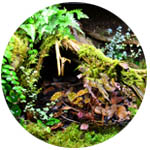
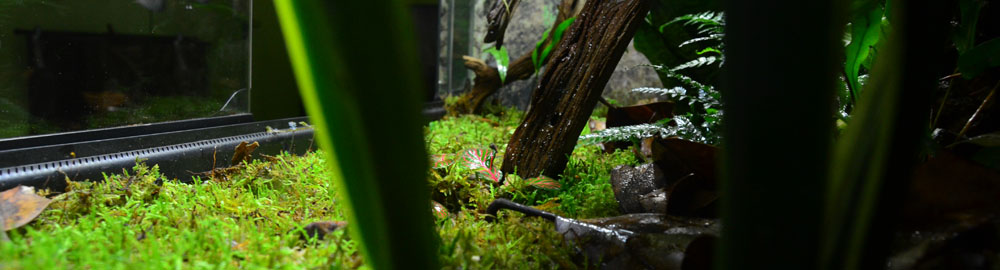
Because the New Caledonian Giant Gecko is such a big species, we elected to use the V2 substrate option of our Vivarium Substrate Base Kit designed for this particular enclosure. The NEHERP V2 Vivarium Substrate was designed specifically around the live vivarium requirements of Geckos & similar species. The substrate layer was seeded with Isopods & Springtails as a clean-up crew. In this particular example we used Giant Orange Isopods, but a large enough population of Dwarf Purple or Dwarf White Isopods would also do the trick. We used a lot of Magnolia leaf litter since it breaks down so slowly, with a few Live Oak leaves added for good measure.
For tons more information relating to both substrate choice & live microfauna, check out Vivarium Construction 101 & Vivarium Construction 102.
Lighting
How this vivarium is illuminated
☆ Check out Vivarium Lighting 101 for a ton of great vivarium lighting advice & information. ☆
Lighting is one of the most important aspects of building a live vivarium, and the taller an enclosure gets, the more difficult in becomes to illuminate. We've got a bunch of great lighting info available on Vivarium Lighting 101, since we don't want to get too far into the detailed specifics in this Vivarium Showcase. To put it simply, we wanted a lighting solution which could grow our NEHERP Live Moss Slurry with ease, while keeping temperatures down within the vivarium for the heat-sensitive Gecko.
There are a few lighting solutions we carry for this size enclosure, depending on the overall goals of the build. With this theme's recycled theme in mind, we decided to stick with the tried & true screw-in LED option, since we had a badly scratched 36in Exo Terra Compact Top lying around the shop. A total of four NEHERP Value Grow (VG13) LEDs were installed. The NEHERP screw-in LED option is a favorite among most of the NEHERP members, since it's often the best bang for the buck in terms of brightness, longevity, and plant growth. Before we install LEDs in a Compact Top, we always remove the aluminum reflectors inside the fixture help keep temperatures lower while extending the life of the LEDs. Like all of our vivaria, it's timed for 12 hours on, 12 hours off, to encourage a healthy circadian rhythm for all the living things inside.
For a whole lot more information relating to illuminating a live vivarium, visit Vivarium Lighting 101.

Plants
Flora selection can make or break a vivarium
☆ Visit Vivarium Construction 101's plant paragraphs for advice on how & where to mount specific plants. ☆
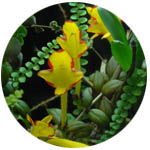
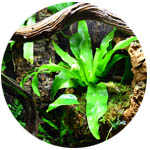
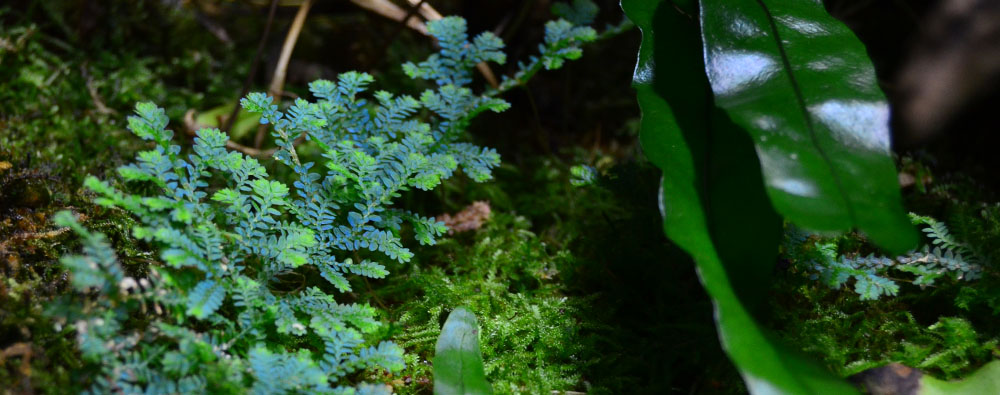
Considering this vivarium houses the largest Gecko species on Earth, we needed to carefully choose plants which could handle the inevitable abuse which would ensue. For trailing plants we decided on using Philodendron scandens, Selaginella uncinata, and Hoya carnosa. The Philodendron & Hoya were chosen since they are especially tough plants, while the Selaginella was added as more of an accent piece for more shadowed areas of the enclosure. Fern species include Asplenium sp. 'Birds Nest', Microsorum pustulatum, and Polystichum tsus-simense. All three species were selected due to their ability to withstand the weight of the Gecko without permanent damage.
We love using Tillandsias in enclosures with humidity ranging from 65-80%. We selected T. bulbosa, T. brachycaulos, and T. myosura, since all three have tougher foliage than some of the more common Tillandsia ionantha species. The tiny red plant at the base of the wood decor towards the center of the vivarium is Fittonia albivenis, which isn't especially tough, so we'll see how it fares long-term. As with most of our NEHERP Gecko Vivarium builds, we added a couple Sansevieria plants for good measure. Admittedly they aren't the best looking plant in the world, but they are one of very few compact, easy to trim, and easy to grow plants which can support even a large Gecko's weight. Furthermore, our Crested & Gargoyle Geckos spend a significant amount of time climbing on their sturdy leaves. Lastly, there's plenty of live NEHERP Vivarium Moss & Moss Slurry to go around. (Who'd have guessed?)
Salvaged Plants:
Some of the plants used in this build were destined for the dumpster:
NEHERP Moss Slurry: It's an unfortunate fact that we do end up wasting quite a bit of our live NEHERP Moss Slurry almost every day. Since the Slurry is made fresh every single day, whatever is left over at the end of the day gets donated to either NEHERP staff members or lucky clients. If there are no takers, the remainder is thrown out. The Slurry in this vivarium is that "left over" stuff!
Birds Nest Fern We don't even carry this species at NEHERP, since it gets enormous. This particular plant was a special order for a client who later decided against using it. It'll need some trimming now & again, and will likely outgrow the vivarium in 2-3 years, but in the mean time, we think it looks pretty good!
Kangaroo Fern Notice the burnt tips? We had a Kangaroo Fern set a little too close to the plant growth lights over a long weekend, which caused some damage. The plant will absolutely survive, but it wouldn't be good enough for us to send out to a client. In the "Recycle Bin", it went!
All The Clippings Every plant we sell at NEHERP is bare rooted before shipment to keep shipping inexpensive & help guarantee safe arrival. What happens when a client orders a rooted portion (or clippings) of a plant, leaving just an extra strand or two? Well, most of the time it goes in the "to be propagated" bin. This time, the plants went straight into the vivarium. (After the appropriate processing procedure of course!) The Hoya, Philodendron, and Selaginella were all grabbed over the course of a week or so, as orders were shipping out. If you propagate or need to trim plants regularly, keep this in mind! It's pretty easy to grow a bunch of plants from clipping.

So that's how we did it!
We hope you enjoyed this vivarium's showcase!
Building the background & planting this enclosure was a bit of a challenge, so we hope the outline described above helps paint an even more specific picture than the Heavy Duty Custom Background article provides. Please check out our Vivarium Building Articles for a ton of great info, and don't hesitate to contact us if something isn't answered on the site. Thanks for reading & good luck with your vivarium build!
The Parts List
Everything we used to build the above live vivarium
Lighting
• Exo Terra 36in (Large) Compact Top
↑ Reflectors Removed! ↑
• 4qty NEHERP Value Grow LEDs (VG13)
Supplies
• NEHERP Base Kit w/V2 Substrate
• Isopod Culture
• Springtail Culture
• NEHERP Glass Inserts
• Digital Timer
If one of the links above doesn't take you to the corresponding product, it's probably sold out or discontinued! Instead, the link will auto-direct to the top of that product's category page, where you might find something similar.
That's the end of this particular vivarium's feature...
But there's plenty more where that came from!
Something went wrong...
Your browser is blocking active scripts!
This part of our website requires jQuery script to display properly.
Please turn off script blockers and/or allow scripts in your browser settings to continue.
* Our website is best viewed in modern Chrome, Firefox, or Safari browsers. (Not IE / Edge!)
If you suspect an adblocker is blocking scripts, please whitelist us. Our site has no ads to block.