


Semi-Bioactive Vivarium Construction
How to build a living terrarium for larger reptiles
No affiliate marketing, ad revenue, or paywalls. Just honest advice from trusted terrarium experts!

Semi-Bioactive Vivarium For A Ball Python
Fully custom cork background w/ghostwood focal decor

Exhibit Designed For A Large Lizard Species
Cork-tile based background, w/ghostwood & vines added

Semi-Bioactive Terrarium For A Colubrid (Corn / King Snake)
Note: Dry-tolerant plants, more lightly planted
Exhibit Designed For A Large Lizard Species
Cork-tile based background, w/ghostwood & vines added
 Collapse All Sections
(Select A Single Topic To Read)
 Expand All Sections
(View Whole Article At Once)
Section 1:
Introduction To Semi-Bioactive Vivarium Design

In recent years, bioactive terrarium design has become increasingly popular with keepers of small Reptiles & Amphibians. The idea is simple: recreate a small living ecosystem within the enclosure using natural substrate, plants, beneficial microbes, and detritivorous microfauna. In many cases, these systems can become remarkably stable and low-maintenance. Many "fully bioactive" enclosures built for smaller inhabitants are almost completely self cleaning. However, for many snakes and larger reptiles, the concept of a fully self-cleaning ecosystem is rarely realistic. This is where semi-bioactive vivarium design becomes an especially practical and effective approach.
A semi-bioactive vivarium still incorporates living components such as plants, microfauna, and a biologically active substrate. The key difference is that the keeper still spot-cleans waste, much like in a traditional enclosure, while the microfauna and living substrate help break down any remaining trace organic material. Many of the advantages of fully bioactive systems still apply, including stable humidity, improved air quality, natural plant growth, odor reduction, and a constantly evolving enclosure environment. With consistent spot cleaning and careful moisture management, partial substrate changes become infrequent, and full substrate replacements are needed even less often.
What To Expect:
• A healthier, biologically active substrate
• Improved humidity stability
• Natural plant integration and enrichment
• Longer intervals between substrate changes
• A more natural enclosure environment
• Strongly improved visual appeal
⚠ Important Note Limiting This Article's Scope:
In the context of this article, “larger reptiles” refers to species such as Boas, Colubrids, Iguanas, Monitor Lizards, Pythons, Tegus, Water Dragons, Basilisks, and similar animals that produce significant waste and regularly disturb enclosure substrates. Smaller species (~17in and shorter), are typically better suited to fully bioactive enclosures as described in Vivarium Construction 101, rather than the semi-bioactive systems described here. It is also important to note that NEHERP primarily specializes in temperate and tropical ecosystems (approximately 55-99% humidity). As a result, much of the guidance below may not apply to arid or desert setups.
Section 2:
Why Semi-Bioactive Is Better For Larger Reptiles

Snakes and large lizards (especially those that consume rodents) produce far more difficult-to-process waste than insectivorous species. Breaking down the remains of a digested rodent requires dramatically more biological activity in the environment than breaking down the waste of smaller inhabitants. In natural ecosystems, much of this work is handled by large scavengers and decomposers such as fly larvae and carrion insects, organisms that are obviously undesirable in an enclosure. Because of this, a realistically sized vivarium typically cannot function as a completely self-cleaning ecosystem for most larger carnivorous reptiles.
That does not mean beneficial live elements like plants & microfauna should be avoided! In fact, incorporating natural substrate, plants, and microfauna can provide significant benefits for both the animal and the enclosure's environment. Through careful design choices, it's possible to build a beautiful and enriching semi-bioactive ecosystem for large & medium sized reptiles. The key is adjusting expectations. Maintenance is a little more intensive than a "fully bioactive" vivarium would be, but still far less compared to a sterile setup. Plus, the animal enrichment these systems provide is unmatched.
Section 3:
Semi-Bioactive Substrate

At the foundation of any semi-bioactive enclosure is the substrate layer. Unlike disposable bedding systems that are designed to be replaced frequently, or long-term bioactive substrates (such as NEHERP Bioactive Vivarium Substrates) that may remain functional for years, semi-bioactive substrates fall somewhere in between. This type of substrate supports plant roots, beneficial microbes, and microfauna while helping stabilize humidity and environmental conditions inside the enclosure. It lasts significantly longer than typical “pet store” bedding, but it is still designed to be partially replaced on a periodic maintenance schedule rather than remaining undisturbed for years like a fully bioactive system.
To simplify the process of building this type of system, we developed our NEHERP Semi-Bioactive Vivarium Substrate. This blend builds on the same proven ingredient base as our V2 Vivarium Substrate, with additional organic components to create a slightly softer, more soil-like structure that works especially well for heavier-bodied reptiles. The result is an inexpensive substrate that remains airy, well-draining, and resistant to compaction, while still being comfortable for species that prefer to rest or burrow lightly within the surface layer.
For most snake and large reptile enclosures, we recommend a substrate depth of roughly 2.5-3 inches. This provides enough material to support plant growth and maintain a healthy microfauna population while still leaving plenty of usable space inside the enclosure.
Leaf Litter & Ground Cover

Leaf litter can be a helpful addition to many semi-bioactive enclosures when appropriate for the species. It provides natural cover for animals while also serving as a food source for microfauna as it slowly decomposes. Even small pockets of leaf litter can act as useful refuges for springtails and isopods. Because it breaks down over time, it will need to be replenished periodically. Some of our favorite terrarium leaves include Live Oak, Magnolia, Jackfruit, and Sea Grape.
Drainage Layer
In most semi-bioactive enclosures we design, a drainage layer is not added. If misting is conservative and the species does not require extremely high humidity (generally below ~70% relative humidity), the enclosure can often function perfectly well without one. The most important factor is simply ensuring that the substrate never becomes oversaturated. When first establishing the enclosure, keep an eye on moisture levels and adjust misting accordingly. As plants develop root systems and the microfauna population establishes itself, the substrate will gradually become more stable and easier to manage. Skipping the drainage layer can also simplify construction, particularly in PVC enclosures where leak prevention can sometimes be a concern.
Substrate Mini FAQ
Q: No drainage layer? Really?
A: For self-cleaning live vivariums as described in Vivarium Construction 101, a drainage layer is 100% mandatory for long-term success. With a semi-bioactive setup like this where spot cleaning and occasional partial substrate changes are expected, a drainage layer is usually not required. Just be careful not to over-mist!
Q: Why is the semi-bioactive substrate cheaper?
A: It's cheaper to manufacture. True top-quality Live Vivarium Substrate like our NEHERP Original, V2, and ABG mixes all contain 72% or more aggregate material by volume. They are designed to last 7+ years, and have been proven to last over a decade for many clients. Since the Semi-Bioactive substrate isn't intended to last as long, we're able to achieve all of the performance metrics with just ~35% aggregate. It costs us considerably less, and we just passed the savings along. ☺
Q: Can I use a layer of moss or carpeting plants instead of leaf litter?
A: That isn't a great idea in a fully bioactive setup, but in a semi-bioactive setup like this, it's less of a critical issue. Keep in mind leaf litter breaks down and adds nutrients from the substrate, while plants draw nutrients from the substrate. Having live plants spread throughout the substrate will also make partial substrate changes (which are mandatory every once in a while) more difficult. Choosing hardy plants which don't mind their roots being fussed with would be a good bet.
Q: I read that using outdoor soil or skipping steps like boiling leaf litter will make my enclosure "more bioactive". Is that true?
A: Not necessarily. While outdoor materials may introduce additional biological activity, they can also introduce pests, pathogens, and other unwanted hitchhikers. In a controlled vivarium, "bioactive" should mean carefully selected and predictable organisms, not random ones. For this reason we recommend starting with clean, controlled materials and boiling leaf litter before use. Introducing uncontrolled ingredients can sometimes produce interesting results, but the risks usually outweigh the benefits for inhabited enclosures.
Section 4:
Microfauna in Large Reptile Enclosures

Microfauna are small detritivorous organisms that live within the substrate and leaf litter layers of a vivarium. Their primary role is to fragment organic material, breaking larger debris into smaller particles that beneficial microbes and fungi can process more efficiently. This distinction is important. Microfauna do not directly “remove” waste from a vivarium. Instead, they help accelerate the natural decomposition process of organic material through fragmentation. Decomposition comes later, though beneficial microbes like mycorrhizal fungi & more.
In a fully bioactive vivarium designed for small insectivorous species, these organisms can play a major role in recycling organic material over long periods of time. In semi-bioactive reptile enclosures, their role is more limited but still extremely valuable. Microfauna are not expected to fully process large animal waste. Instead, they help break down trace organic material left behind after routine spot cleaning, allowing the substrate to remain healthier and more stable between maintenance cycles.
The two most common and reliable microfauna used in vivariums are springtails and isopods. Springtails are tiny soil-dwelling organisms that feed primarily on fungi, decaying plant matter, and microscopic organic debris within the substrate. They reproduce quickly and typically remain within the soil and leaf litter layers where moisture levels are highest.
In a semi-bioactive snake enclosure, microfauna should be viewed as support organisms rather than a full “clean-up crew.” Their job is to help maintain soil health and process leftover organics between routine maintenance, not eliminate the need for cleaning. When adding cultures, gently place them beneath the leaf litter layer so they can establish safely within the substrate and begin reproducing.
Microfauna Mini FAQ

Q: Will "X" species of Springtail or Isopod be enough to 100% clean up my large reptile's waste?
A: Long story short: The answer is usually no. All vertebrate-consuming Reptiles really should have their enclosures spot-cleaned as necessary for the best result. We explain some of the biology behind why in this article's earlier paragraphs regarding snakes & lizards, and how their waste is especially difficult to biologically process, compared to smaller reptile pets like Crested Geckos.
Q: Should I offer Springtail/Isopod food in the vivarium when I first introduce them?
A: No. Springtails and Isopods are limited by a small available population at first; not by the amount of available food. Adding extra food will not encourage them to reproduce faster, and will provide a significant excess of nutrients which will open the door to opportunistic detritivores. (Fungus Gnats, detritivorous Mites, Phorid Flies) Microfauna will thrive with the lowest risk & greatest performance using the substrate & leaf litter alone. If the environment is designed without a primary inhabitant in mind (no reptile/amphibian/large invert), occasional feeding will eventually be required, but not at first. See our Isopod Care Article for advice in that case.
Q: Will the Springtails/Isopods escape the terrarium?
A: Springtails and Isopods both seek dark, moist locations to live, and actively avoid bright/dry environments. This is an example of Orthokinesis, where both species slow down in ideal conditions and speed up when conditions are less favorable. Both species exhibit negative phototaxis and positive hygrotaxis, which means they have a biological drive to avoid light and seek moisture. Escape is extremely unlikely, unless you live in a mold filled cave. No judgment, of course. Caves are cool. 👍
Q: If Springtails/Isopods escape, will they infest my home?
A: Springtails and Isopods will quickly dessicate and die in most homes, in the unlikely event that they escape their enclosure. The only time Springtails and Isopods can become household pests is if the environment has significant mold or fungus issues.
Q: Can I use Springtails / Isopods I found outside?
A: Wild caught microfauna has the potential to carry pathogens directly into your vivarium. We strongly recommend purchasing microfauna from a responsible & respected breeder.
Section 5:
Hardscaping With Wood and Rock Decor

Background Considerations
For background work with larger species, we typically rely on cork tile backgrounds. Cork is durable, inexpensive, and easy to work with. In glass enclosures, cork tiles or fully custom backgrounds can be added easily. In PVC enclosures, the best approach is usually to start with cork tiles and build outward from there. Because silicone does not bond well to PVC, cork tiles should be bolted in place rather than siliconed. For more information on customizing cork backgrounds, see our Heavy Duty Background Kits and supporting DIY article.
Loose Decor Options
When selecting loose decor for enclosures housing larger animals, stability becomes extremely important. Avoid lightweight or fragile materials that could be tipped over or broken by the inhabitant. Ghostwood and cork rounds are both excellent choices, offering durability and strong climbing support. Halved cork rounds make awesome hides which can blend into the substrate area very nicely. Rocks can also work well where space allows, provided they are positioned securely. Thin branches, manzanita, curly willow, and similar lightweight materials are generally not recommended for larger species.
Cork Planters (Safe Planting Areas)
Cork planters (pictured below) can be extremely helpful in semi-bioactive enclosures. Larger reptiles often disturb or uproot plants placed directly in the substrate, so planting into cork planters mounted on the background helps plants establish more reliably. Our NEHERP terrestrial cork planters function as mobile plant pots with screened bottoms. These allow microfauna such as Springtails to move freely in and out, creating a small refuge that helps maintain the microfauna population even after partial substrate changes. We'll cover cork planters in more detail in the plant section next.
⚠ Remember: This article only mentions the specifics surrounding semi-live enclosures for large inhabitants. For lots more info about vivarium decor, check out Vivarium Construction 101!
Section 6:
Live Plants & How To Use Them

Planting Locations
Before choosing plant species, it’s worth revisiting the planter concept mentioned earlier. Background-mounted planters allow plants to be secured onto the background, where larger animals are far less likely to disturb them. This makes it much easier to establish a plant-covered background without constantly resetting dislodged plants. Over time, plants can root into the surrounding background and spread naturally. Our preferred option is Modular Background Cork Planters, though some builders opt for foamed-in pots or similar setups. If using foamed-in plastic or clay planters, be sure to include proper drainage (such as a hole and tubing) to prevent water buildup.
For substrate-level planting, terrestrial planters act as durable, movable containers that sit partially nestled into the substrate. They help protect plants and root systems from disturbance by larger inhabitants, while also making maintenance easier. Plants can be removed as needed for cleaning, fertilizing, or soaking outside the enclosure. While some use decorative pots like stone or terracotta, our preferred option is Terrestrial Cork Planters. Their screened bottoms allow water and microfauna to move freely in and out, and because the substrate inside is typically left undisturbed, they can act as small refuges for microfauna and beneficial microbes during partial substrate changes.
Plants can also be planted directly into the substrate when appropriate, but keep in mind that partial substrate changes will often disturb or uproot them. This can turn routine maintenance into a more involved process. For that reason, relying on cork planters whenever possible tends to make long-term care simpler and more predictable.

Plant Placement
Arranging plants in a semi-bioactive terrarium can be a bit tricky. We generally aim to keep the front and center areas more open. This makes it easier to spot clean, perform partial substrate changes, and access key items like hides and water bowls.
A “horseshoe” layout works well here. It leaves open space up front while concentrating plants toward the back and sides, where they’re less likely to be disturbed, and more likely to climb the background. These tighter areas tend to grow in nicely over time and give plants a better chance to establish, while also benefiting the animal and microfauna within the enclosure.
In the graphic, the lime green "terrestrial plants" area will act as a microfauna refuge for the rest of the enclosure. Spot cleaning would happen wherever it's necessary. The (infrequent) partial substrate changes would focus mostly on the "semi-open space" illustrated in brown. This concept makes the process quick, simple, inexpensive (less to replace), and keeps a nice refuge of beneficial biology thriving elsewhere in the enclosure.
Plant Selection
For enclosures housing larger reptiles, starting with healthy, established plants that tolerate your species’ environmental conditions is usually the best path forward. While we specialize in smaller terrarium plants at NEHERP, our grow rooms simply don’t have the space required to consistently produce the larger houseplant-style specimens that often perform best with bigger animals. As a result, many keepers source these plants through traditional houseplant suppliers. A bit of independent research into plants that tolerate your animal’s temperature and humidity requirements will go a long way.
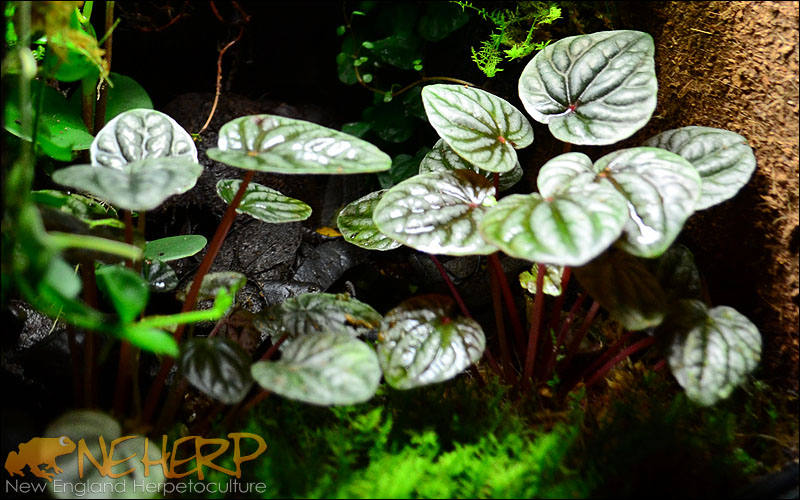
For lower-humidity enclosures, tougher houseplants tend to perform best. Good candidates include Dryopteris erythrosora, Dracaena species, Sansevieria, Echeveria, Aspidistra elatior, and Chlorophytum comosum. These plants may not be rare or exotic, but they are generally tolerant of drier air and fluctuating moisture levels.
For moderate-to-high humidity environments, many of the above plants can still work, along with common species such as Pothos, Philodendrons, Monstera, Syngonium podophyllum, Birds Nest Fern, Autumn Fern, and a wider range of common ferns. Most of these plants are widely available through commercial horticulture sources and are typically easy to replace if needed.


Click here to toggle/compare grower operations
Choosing A Houseplant Supplier
When sourcing plants from traditional nurseries, it’s worth understanding their pest management practices. Fertilizers are unavoidable in plant production, but some nurseries rely on stronger chemical pesticides or systemic treatments that remain active within plant tissues for extended periods of time. Because these harsh systemic chemical treatments cannot simply be washed off the plant, they can sometimes create compatibility concerns in vivarium environments. Many pesticides can kill Springtails and Isopods. Many fungicides can target beneficial mycorrhizal fungi. Larger species of herps may not be as sensitive or at-risk to common greenhouse treatments as smaller Reptiles & Amphibians, but the concern is still environmentally significant. Many nurseries use milder or organically derived pest management approaches instead, which are generally less concerning. A simple question such as “What kinds of pest management sprays or treatments do you typically use?” will usually result in a helpful answer from knowledgeable staff. If you're unsure about a treatment they use, take a moment to research it and decide whether it makes sense for your situation.
⚠ Important Note: This section's plant advice applies to larger herp species. If we were discussing enclosures for smaller reptiles, amphibians, herbivores, or other sensitive species, we would recommend a much more cautious approach to plant sourcing! Sticking to real specialty shops like NEHERP when selecting plants for those kinds of species is the best bet. ♥
Plant Processing
No matter where plants are sourced, we always recommend following the industry standard Plant Processing Procedure (separate article). It's always worth the extra 5 minutes to get that peace of mind and do it right. A quick process will reduce the chances of encountering plant pests, diseases, and may help reduce risks associated with contact-based surface-applied chemicals used by commercial growers.
Section 7:
Terrarium Lighting

Lighting can be a complex topic, and we've written our Vivarium Lighting 101 article to explain all of the basics in detail. This article is already plenty long, so this section will briefly explain the things to consider for semi-bioactive enclosures specifically. One big difference here is the use of larger houseplants, rather than true terrarium plant species. Part of what makes a species a great houseplant is a low lighting requirement. Since many of these species have comparatively low lighting requirements, having ultra-high-output LEDs to support them is much less of a concern. In short - selecting a light source on a semi-bioactive terrarium often results in a lower-output, less expensive option compared to our traditional "fully bioactive" setups, simply because the plants themselves are so undemanding.

Recommended PAR Output
What Is PAR & PPFD?
PAR light refers to the range of light wavelengths plants use for photosynthesis (roughly 400–700 nm). Rather than measuring brightness as humans see it (Lux/Lumens), plant lighting is evaluated by how many photons in this range reach a surface. This is typically expressed as PPFD (Photosynthetic Photon Flux Density) and written as: X µmol/m²/s @ 12in. Where X represents the number of photosynthetically active photons striking one square meter every second. Because light intensity drops quickly with distance, manufacturers commonly report PPFD at a standardized distance such as 12 inches to make lighting systems easier to compare. We're glossing-over the science-y stuff, but Vivarium Lighting 101 has the full version if you are interested!
PAR/PPFD Goals For Low-Light Houseplants In Semi-Bioactive Terrariums:
Enclosures Roughly 18in Tall: ~45-75+µMol/M²S @ 12in
Enclosures Roughly 24in Tall: ~55-140+µMol/M²S @ 12in
Enclosures Roughly 36in Tall: ~300+µMol/M²S @ 12in
Enclosures 48in+ Tall: ~350+µMol/M²S @ 12in
Referencing the list above and selecting an appropriate light source rated for the height of your enclosure should be a cinch! We recommend avoiding all lights which do not include relevant PAR/PPFD data. There's only one reason a seller wouldn't include it! 😉

Mounting Lights: Internally Or Externally
External Mounting (Recommended)
At NEHERP, we strongly recommend only using enclosures which allow for the external mounting of lighting and heating devices. For best results, choose an enclosure with an adequate screen, glass, or acrylic top which allows for all of the accessories your species requires to simply rest on top of the enclosure. Well designed enclosures will have plenty of space on a screen top for overhead heat, lighting, and UVB (if necessary for the species).
Internal Mounting
Some enclosures, particularly lower-end PVC models, do not allow lights or heaters to be mounted externally. Internal lighting introduces several concerns including moisture exposure, electrical safety risks, and potential heat buildup. Enclosures with fully solid tops can make these issues especially difficult to manage. If internal lighting becomes necessary due to enclosure design, it is important to use fixtures specifically rated for that environment. This is where IP (Ingress Protection) ratings become important. At NEHERP, we only use low-voltage (12-24V) lighting rated IP65 or higher for internally mounted systems. (Zoo Med's Reptisun LED is currently the only IP65-rated LED we carry.) An IP65 rating indicates a fixture designed for outdoor use and resistant to water exposure such as rain or sprinklers, while higher ratings like IP66, IP67, and IP68 offer even greater protection. Internally mounted LEDs can be secured using several methods including acrylic brackets, bolts or screws, weather-rated Command Strips, or heavy-duty double-sided tape. Some PVC enclosures may also require additional ventilation when internal lighting is used to prevent heat buildup.
⚠ Important Note: NEHERP strongly recommends against installing non-IP-rated 110V lights or heaters inside PVC enclosures. While the National Electrical Code does not specifically address terrariums or vivariums, it does establish requirements for electrical equipment exposed to moisture. NEC section 410.10 (Luminaires) states that fixtures installed in damp or wet locations must be listed for that environment. Since the interior of many reptile enclosures routinely experiences high humidity, condensation, or direct water exposure from misting systems, many fixtures may not be appropriate for internal installation. Sticking to low voltage (12-24V) fixtures rated IP65 or better, and/or rated for wet/humid locations is the best bet.
Section 9:
Care & Maintenance
Semi-bioactive enclosures require a bit more hands-on maintenance than fully bioactive systems, since waste is routinely removed rather than fully processed by the ecosystem. However, most keepers still find them far easier and more enjoyable to maintain than traditional “sterile” enclosures with disposable bedding. The living substrate, plants, and microfauna help stabilize the environment and reduce the frequency of major cleanouts, while still allowing the keeper to remain actively involved in maintaining the enclosure. The sections below outline the simple maintenance practices that keep these systems healthy and functioning long-term.
Misting & Watering
Plants should be watered directly in their pots or planters according to the moisture preferences of the individual species. The enclosure itself may be misted as needed to maintain appropriate ambient humidity for both plants and the inhabitant. Light misting of the substrate can also help maintain healthy moisture levels within the soil layer. The goal is to keep the substrate lightly and evenly moist, while avoiding oversaturation. Properly maintained substrate should feel slightly damp to the touch, never waterlogged or saturated. Every enclosure is different, but we typically mist semi-bioactive terrariums 1-2X per day. (Misting Systems can make that process effortless, and easier to dial-in!)

Plant Maintenance
Live plants will benefit from occasional trimming to keep the enclosure balanced and well-lit. If plants begin reaching the top of the enclosure or blocking light from reaching lower areas, selectively pruning them back will help maintain healthy growth throughout the environment. Trimming from the base or thinning dense growth can also help preserve open space where appropriate and prevent plants from crowding one another. Many keepers find this light pruning to be one of the most enjoyable aspects of terrarium care, allowing the enclosure to gradually evolve while maintaining a clean, natural appearance.
Since fully bioactive vivariums rely on animal waste as a form of fertilizer for the plants and semi-bioactive enclosures are spot-cleaned before waste can be processed by the environment, a bi-monthly feeding with a mild nutrient solution will be a good bet for live plants. Feeding cork planters where plants are potted can be done carefully every 1-2 months. For heavy feedings, or for those without access to ultra-mild nutrient solutions, pulling the planters out of the environment for a few days for fertilization treatment works. For reference, mild fertilizers generally are not harmful to beneficial Springtails, Isopods, or Mycorrhizal fungi.

Spot Cleaning
Semi-bioactive terrariums are not designed to fully break down the waste produced by their inhabitants, so routine spot cleaning is still required. For snakes and many larger reptiles with relatively infrequent bowel movements, this typically means routinely checking the enclosure visually and removing waste when it appears. When waste is found, it is best to remove a small amount of the surrounding area of substrate along with it, then replace that section with a fresh handful. This simple step helps keep the enclosure clean and can significantly extend the lifespan of the remaining substrate. Semi-bioactive setups perform best with consistent maintenance.
Substrate Changes
Even with good maintenance, some gradual substrate replacement will eventually be needed. Instead of replacing everything at once, it is usually better to refresh sections of the substrate gradually. Removing and replacing small areas during routine cleaning helps preserve the existing microbial and microfauna communities that make the system function.
Over long periods of time, most semi-bioactive substrates will eventually need to be replaced. With good maintenance practices, a full replacement is typically only required every 6-18+ months, depending on the species, feeding habits, and enclosure conditions. Some clients with tight maintenance schedules who are careful to never over-or-under water, have pushed this to 24+ months. Results will vary by species, by environmental conditions, and by maintenance diligence.
Causes for immediate substrate refreshes include foul odors and over-saturation. Neither of these should ever happen, and are not normal parts of the process.
Section 10:
Tips, Tricks, and Other Considerations
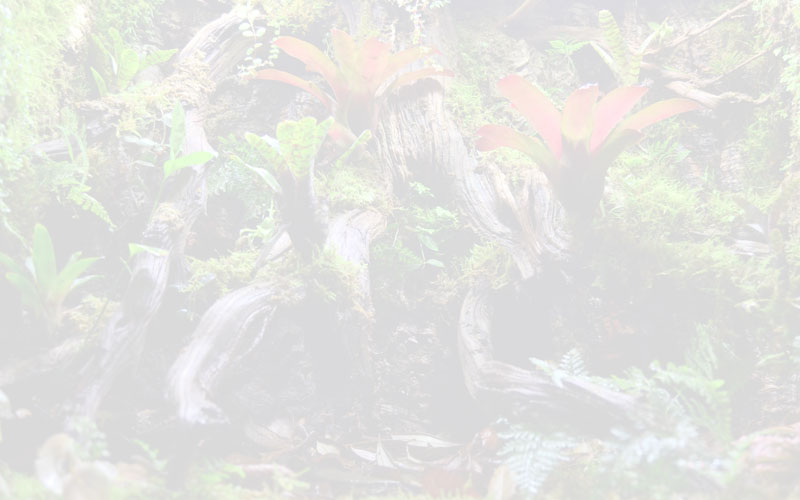
 Always process plants & sterilize small decor items prior to use.
Don't add a moving water feature unless your species 100% requires it. Water features drastically increase maintenance effort, pose environmental risks, and are just not worth it, unless the species you are working with will directly benefit from one's inclusion.
We recommend having your vivarium set up for at least 3 weeks before introducing animals. A 4-6 week acclimation period is ideal, if you can stand the wait! This time will allow plants to become established, and microfauna to build a healthy population within the enclosure.
Certain species are at a higher risk of accidentally ingesting substrate or decor while feeding. In some cases, loose materials can cause impaction if swallowed, which may become serious if not addressed quickly. Feeding behavior varies widely between species and even between individual animals, so it is always best to confirm feeding practices with experienced keepers of your particular species. For many snakes and larger reptiles, simple precautions can greatly reduce risk. These often include tong-feeding prey, feeding animals in a separate container, or temporarily placing prey on a clean feeding surface such as paper towels. These methods help prevent accidental ingestion of substrate while still allowing the animal to feed naturally.
Always use dechlorinated water at a minimum. Reverse osmosis water is an excellent choice for misting, since it won't leave water spots on the glass. We do not recommend distilled water, although many enthusiasts have good luck with it.
A little mold after the vivarium is first set up and cycling is completely normal so long as proper vivarium building techniques were followed. For more info on this slightly more advanced topic, check out our Vivarium Construction 102 article. This typically resolves before the 3-6 week acclimation period is over.
Section 11:
Thanks & References

The free informational articles on our website are made possible by the direct support of our small business's customers. By buying stuff at our shop, customers like you help fund everything we do from product development to article publishing. This article doesn't rely on ad revenue, paywalls, or affiliate marketing. We do our best to remain unbiased by turning-down sponsorships, advertisers, or paid manufacturer promotions. Instead, our whole store's inventory and recommendations are based upon which supplies performed best in our real-world tests from 2009-to-present. If you found this article helpful and would like to help ensure it remains free & frequently updated, we hope you'll support our shop when it comes time to build your own terrarium. If you use the info you found on here and choose to shop elsewhere, please remember to thank one of our customers for keeping this info free for you!  Our customers have helped make NEHERP possible for over a decade, and we couldn't be more grateful.
The vivarium, exotic plant, and herpetofauna enthusiast communities we serve are incredible, and the pool of knowledge they bring to the table can't be understated. We sincerely thank them for supporting our company and offering a seemingly endless stream of information over the years. Our small team is proud to have accumulated over 50 years of combined experience working with live vivarium ecosystems, and we look forward to learning more as time goes on. We wanted to be sure that we got our facts straight on a couple different topics before publishing this article, and hope you find the below references useful! If you think anything in our article could use a correction, update, or just extra info please let us know. Our goal is to offer the best info we can, and we're always eager to learn.
1 "Vivarium" Merriam-Webster.com Merriam-Webster Inc, 2020
Accessed 9 Aug. 2017, https://www.merriam-webster.com/dictionary/vivarium
(Info used: Definition)
----
2 "Terrarium" Merriam-Webster.com Merriam-Webster Inc, 2020
Accessed 9 Aug. 2017, https://www.merriam-webster.com/dictionary/terrarium
(Info used: Definition)
----
"Woodlouse" Wikipedia. Wikipedia.org,
Accessed 9 Aug. 2017, en.wikipedia.org/wiki/Woodlouse
(Info used: Scientific classifications, diversity, common names, native range)
----
"Armadillidium" Wikipedia. Wikipedia.org,
Accessed 9 Aug. 2017, en.wikipedia.org/wiki/Armadillidium
(Info used: Scientific classifications, native range)
----
"Porcellio" Wikipedia. Wikipedia.org,
Accessed 9 Aug. 2017, en.wikipedia.org/wiki/Porcellio
(Info used: Scientific classifications, diversity)
----
"Taxis" Wikipedia. Wikipedia.org,
Accessed 9 Aug. 2017, en.wikipedia.org/wiki/Taxis
(Info used: Definition of Taxis & corresponding stimuli)
----
"Porcellio scaber" Animal Diversity Web. / University of Michigan-Ann Arbor, Cynthia Riggio
2013, animaldiversity.org/accounts/Porcellio_scaber/
(Info used: Physical description, behavioral)
----
"Increased Turn Alternation by Woodlice (Porcellio scaber) in Response to a Predatory Spider, Dysdera crocata" Glen D Carbines, Roger M Dennis, Robert R Jackson
1 Jan. 2001, escholarship.org/uc/item/2t8495g5
(Info used: Turn alternation confirmation for Porcellio)
----
"Decision-Making and Turn Alternation in Pill Bugs (Armadillidium Vulgare)" International Journal of Comparative Psychology, Tohru Moriyama
1999, escholarship.org/uc/item/1wn9s57r
(Info used: Turn alternation confirmation for Armadillidium)
----
"Individual Preferences and Social Interactions Determine the Aggregation of Woodlice" Cédric Devigne, Pierre Broly, Jean-Louis Deneubourg
25 Feb. 2011, doi.org/10.1371/journal.pone.0017389
(Info used: Understanding thigmokinesis & aggregation)
----
All referenced links accessed between January and February 2020
Reference URLs direct you away from our site where our privacy policy doesn't apply
----
Thanks for reading our article, and as the legend says ♥♥♥...